Overview
The Modular Plinth Project is a collaborative initiative between designer Arrien Weeks and Concordia University’s FOFA Gallery. Born from a 2023 conversation with former gallery director Nicole Burisch, the project addresses a common gallery dilemma: the environmental and logistical toll of traditional exhibition furniture.
By rethinking the “white box,” this project aims to reduce exhibition waste, solve storage constraints, and push the aesthetic boundaries of sustainable art curation.
The Problem: The Hidden Cost of the “White Box”
Standard gallery plinths are often bulky, heavy, and difficult to store. They require constant maintenance—sanding, plastering, and repainting—which consumes significant labor and materials. When no longer needed, they often end up in landfills due to their composite material nature.
The Solution: Modularity & Reuse
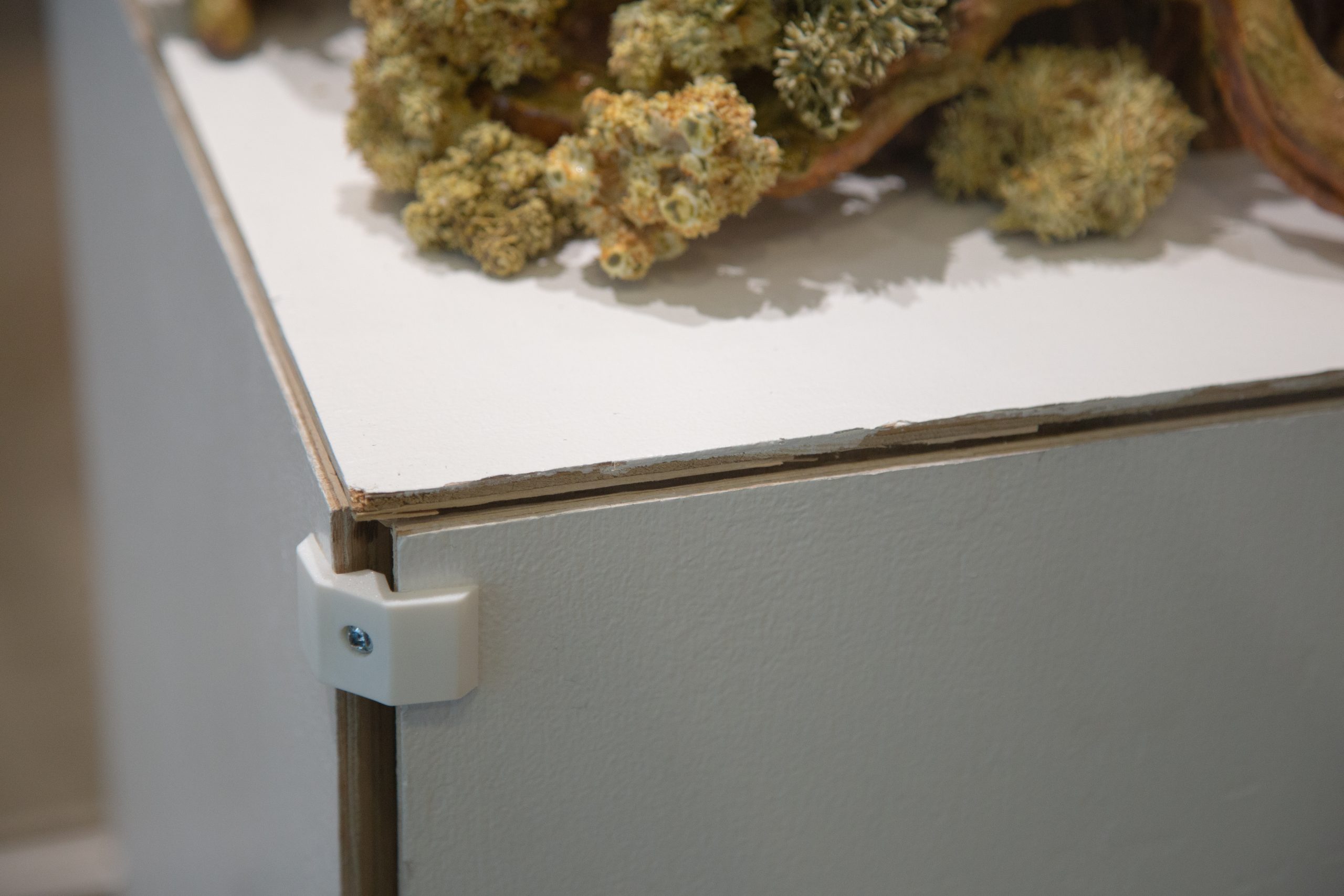
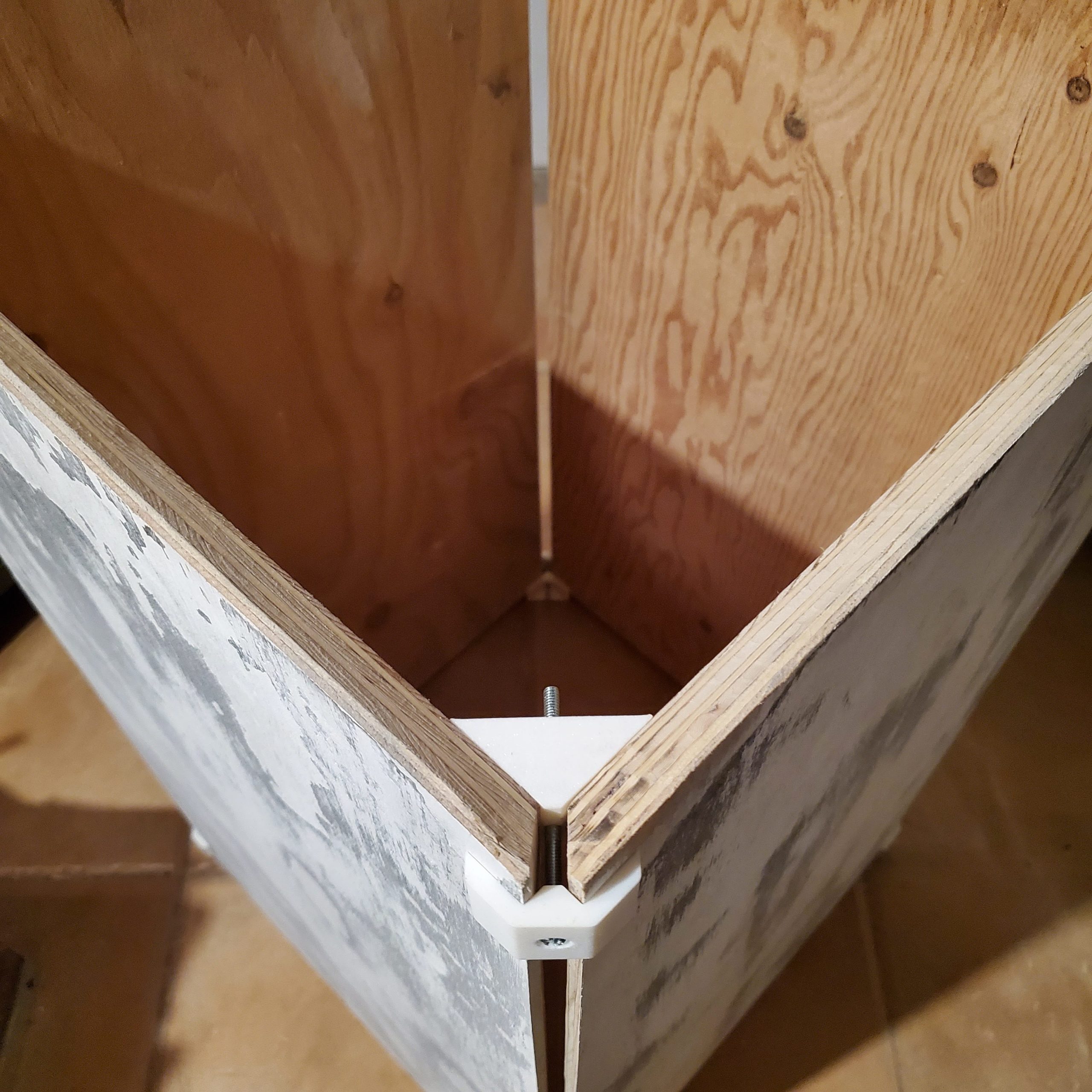
The Re-plinth approach transforms these displays into a “kit of parts.” By using 3D-printed connectors and more sustainable sheet materials, a system is being created that can be disassembled and stored flat, dramatically reducing the gallery’s storage footprint.
New Material Exploration (February 2026)
PHA (polyhydroxyalkanoates) filament made in Québec
- ReGen is made from industrial agriculture residue
Team
Designer: Arrien Weeks
FoFA Gallery Directors: Nicole Burisch, director (FoFA Dallery 2021-2025), Gwynne Fulton, director (FoFA Gallery 2025-present)
Curator in sustainability and engagement: Joé Côté-Rancourt, Josh Jensen
Exhibition Coordination: María A. Escalona
Technical Support: Tom Simpkins (Concordia Fine Arts Wood Shop)
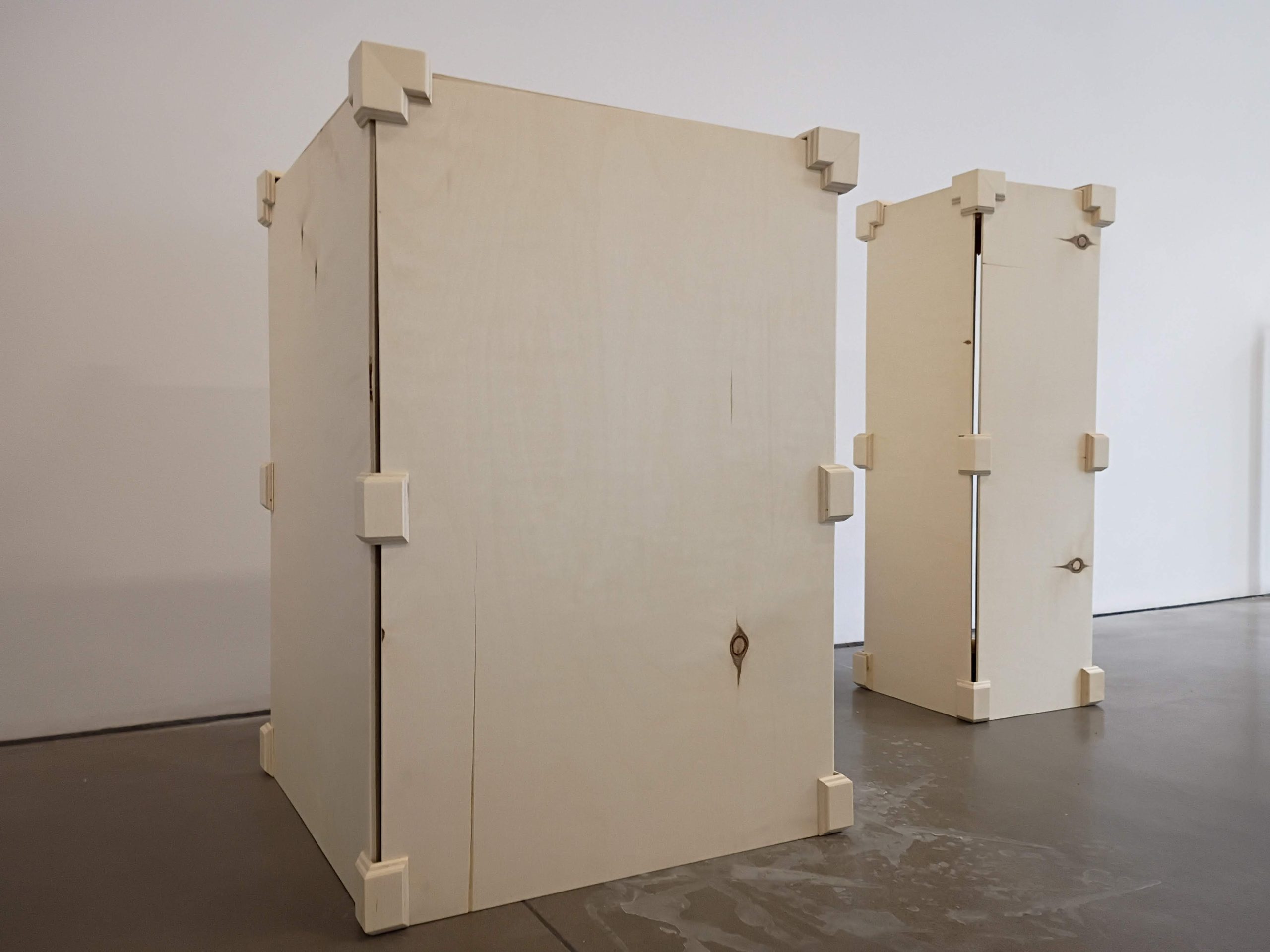
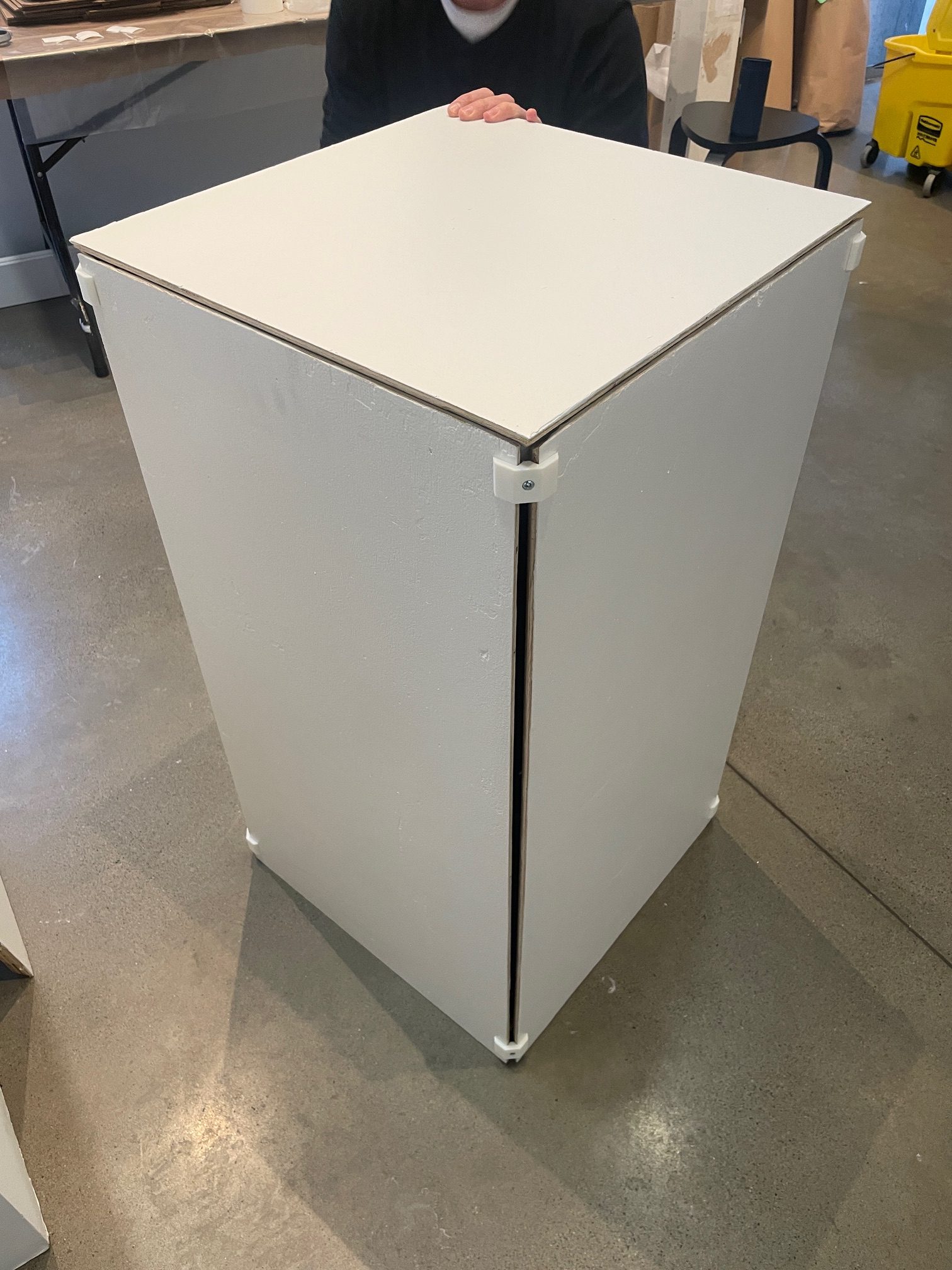
Version 3: Refinement & New Materials (January 2026)
The latest iteration explores the use of high-quality, eco-conscious materials for long-term gallery use.
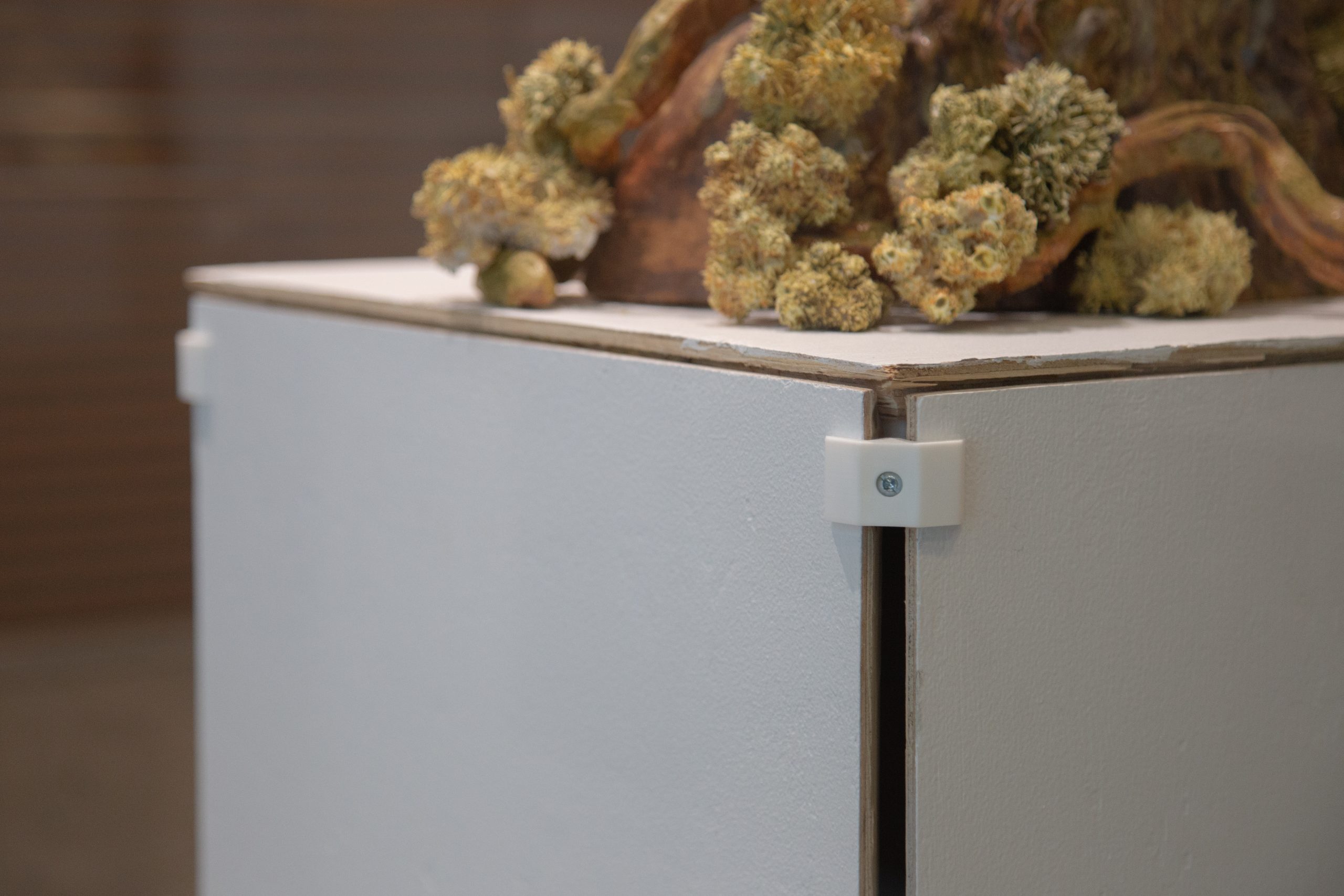
Usage: Currently featured in the grieving reveries exhibition at FOFA Gallery, supporting works by artist Cat Lipiec.
Materials: PureBond plywood (soy-based, formaldehyde-free adhesives), metal fasteners, and 3D-printed PLA assembly jigs.
Innovation: Focuses on “greener” plywood options and local sourcing (exploring manufacturers like Goodfellow) to avoid ethically complex supply chains.
Tools used
Bambu Lab P1S 3D printer, FreeCAD, table saw, 12″ mitre saw, compact router, hand drill, palm sander
Recent Event
Lunchbox Talk: Modular Plinth Project – Three Iterations
Arrien Weeks gave an in-depth discussion on the evolution of the project, the challenges of “bending the rules” in gallery spaces, and took a look at all three versions in person.
Video coming soon…
When: February 11, 2026 | 12:30 p.m. – 1:30 p.m.
Where: FOFA Gallery, EV 1.715, Montreal.
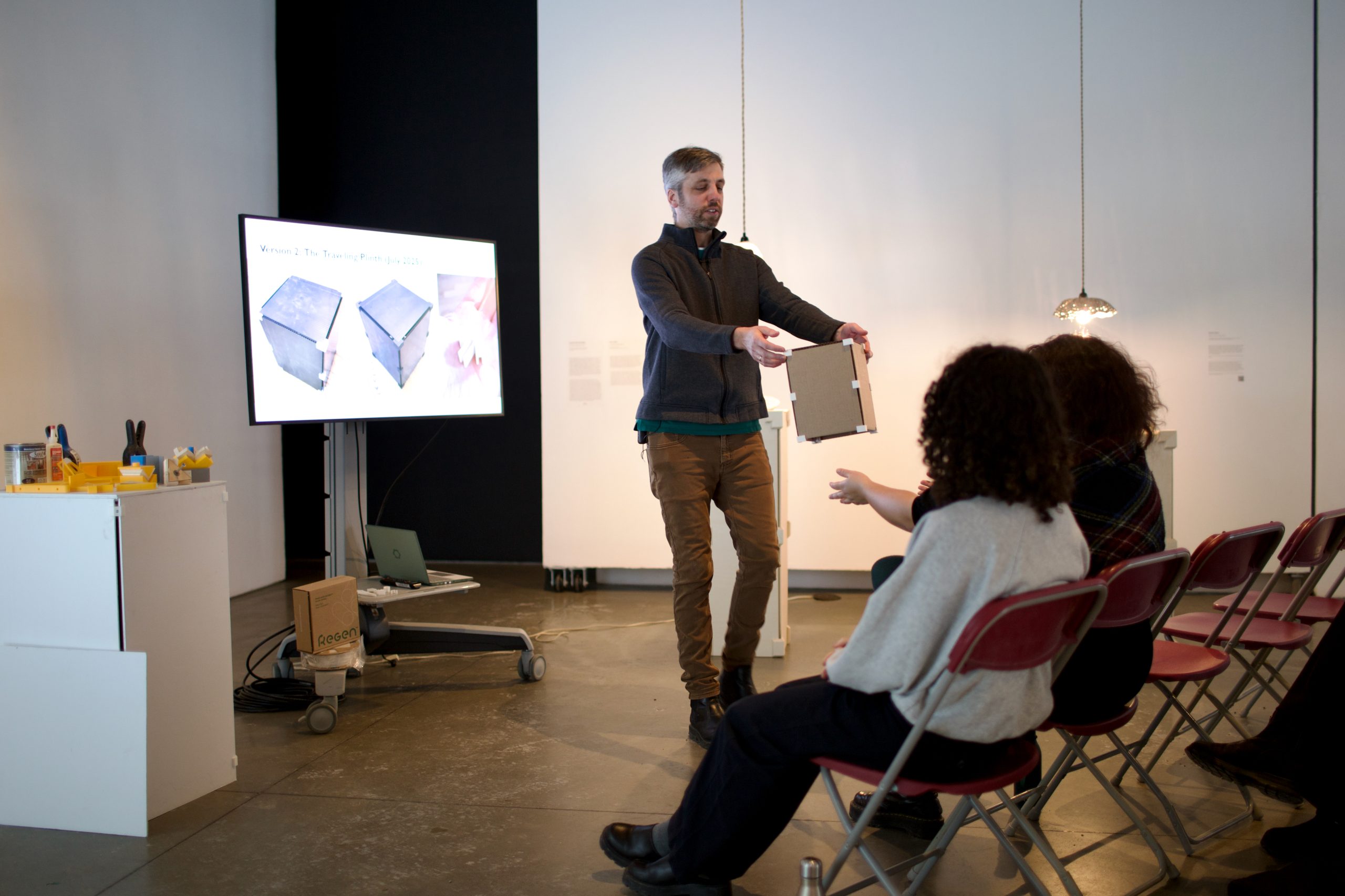
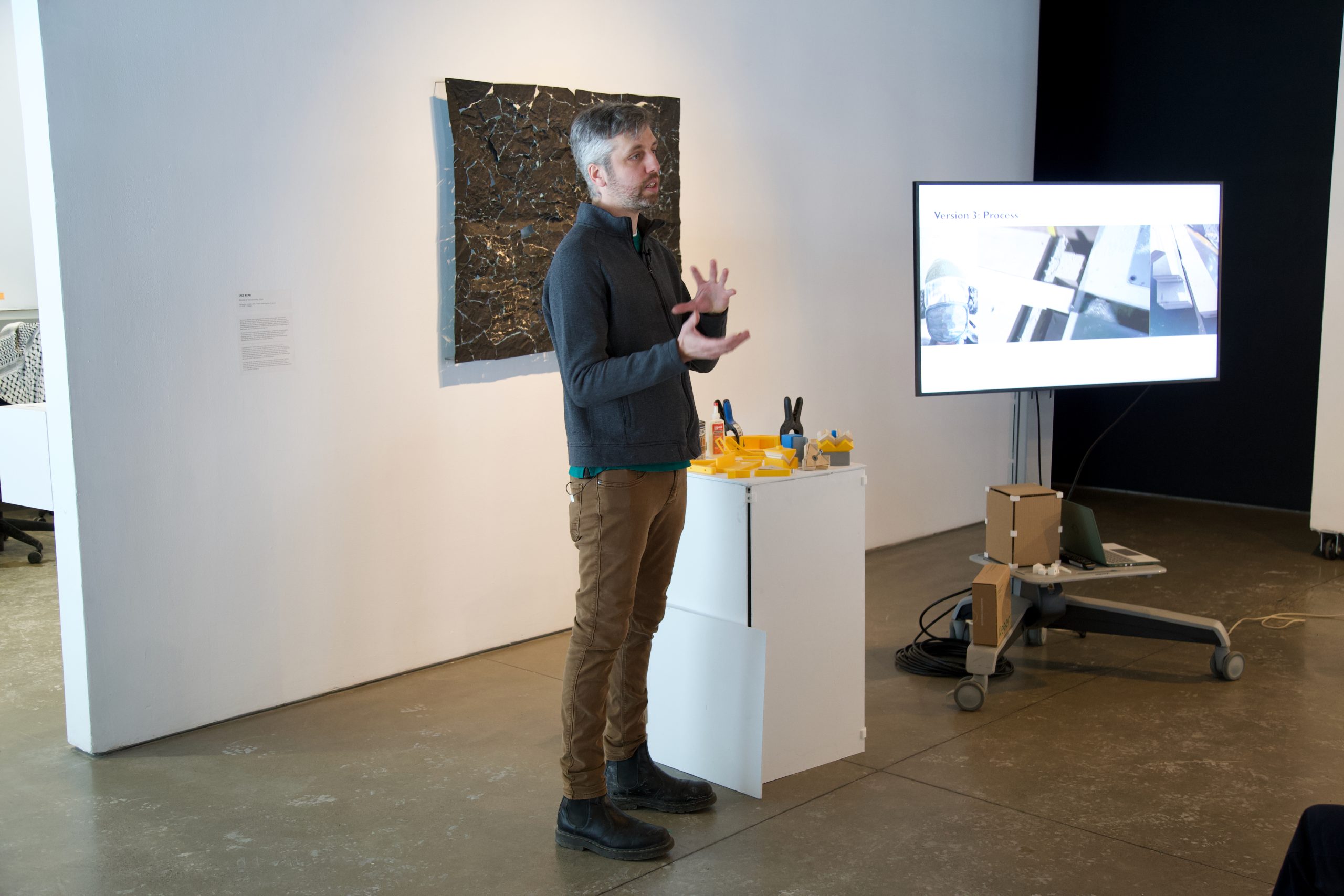
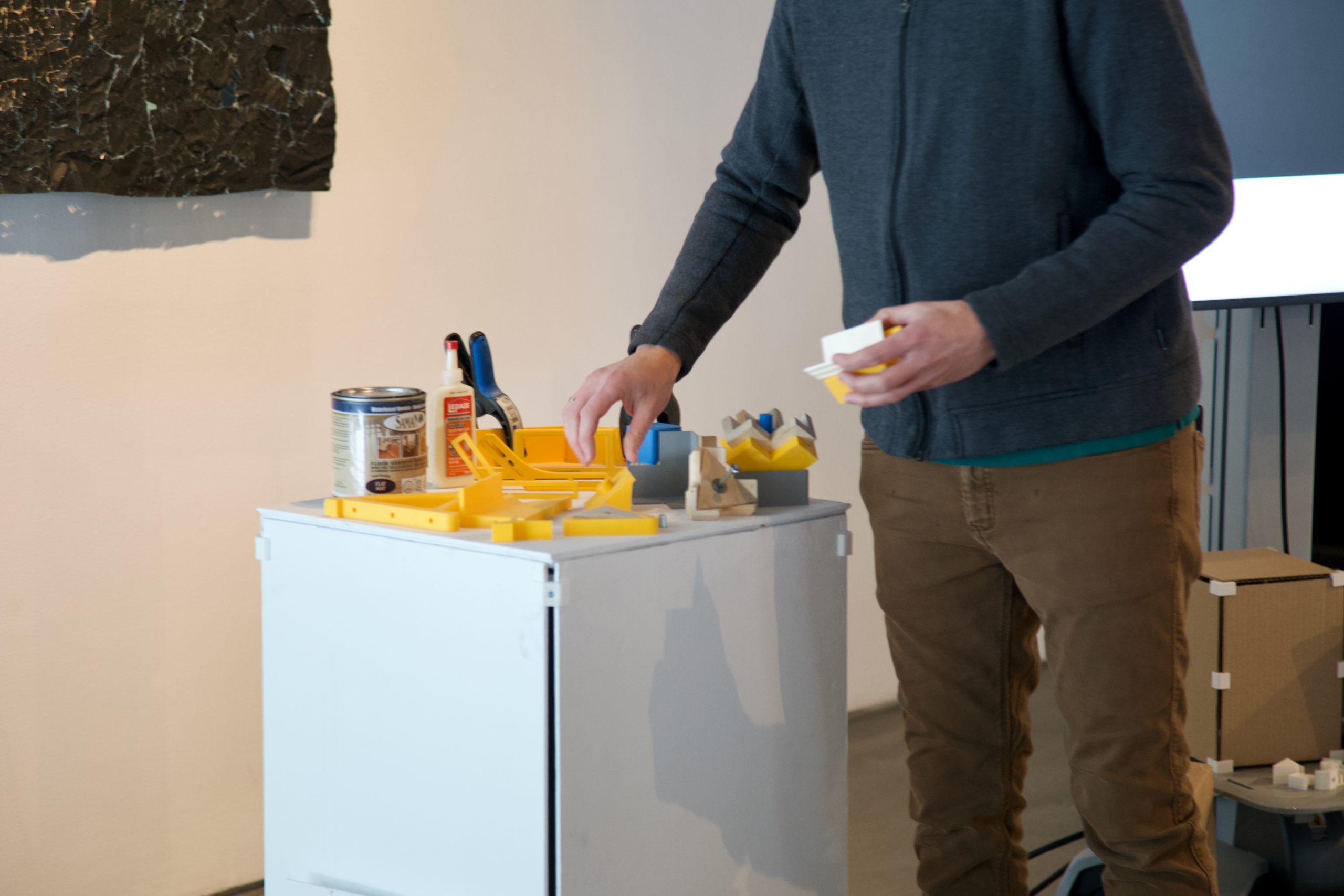
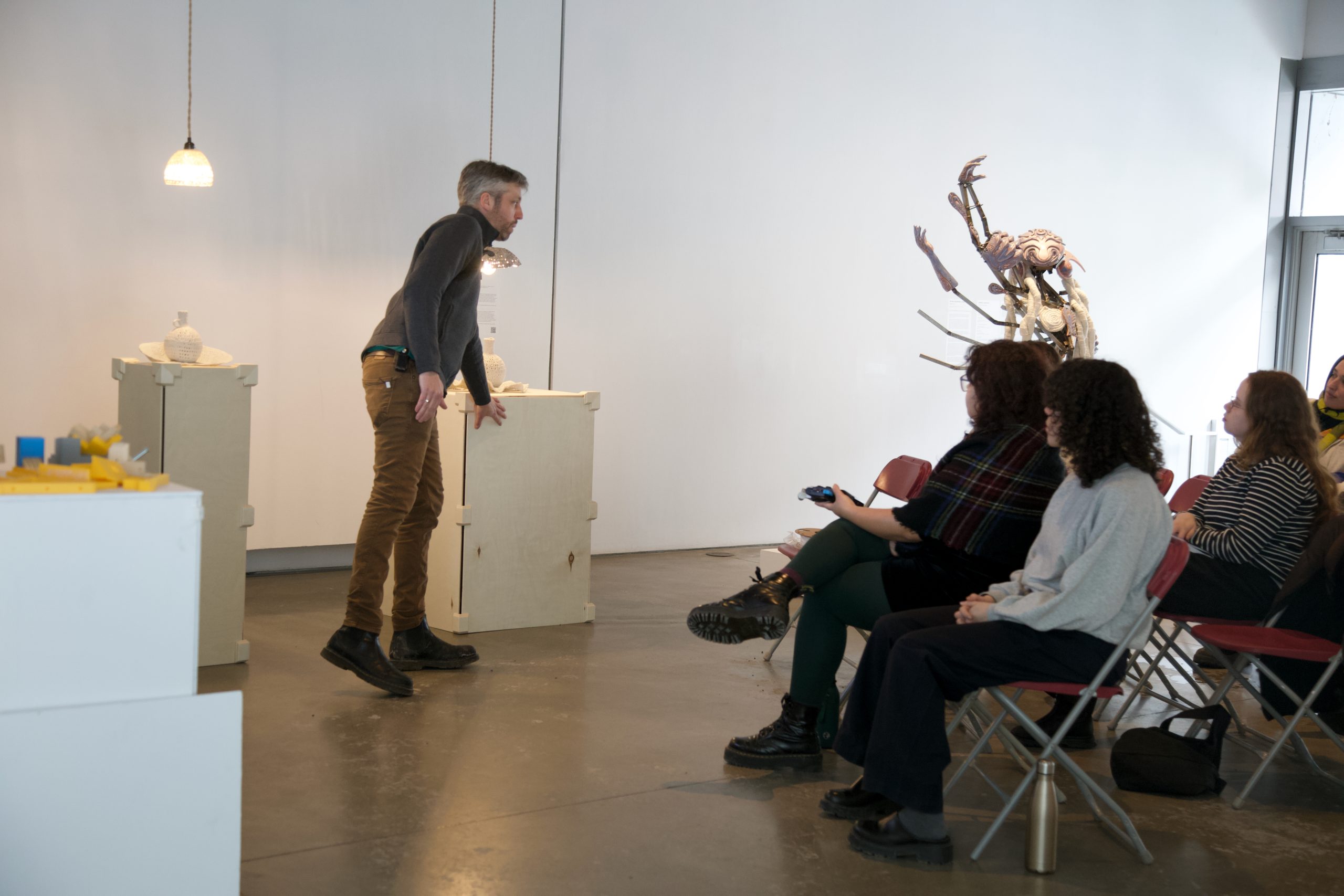
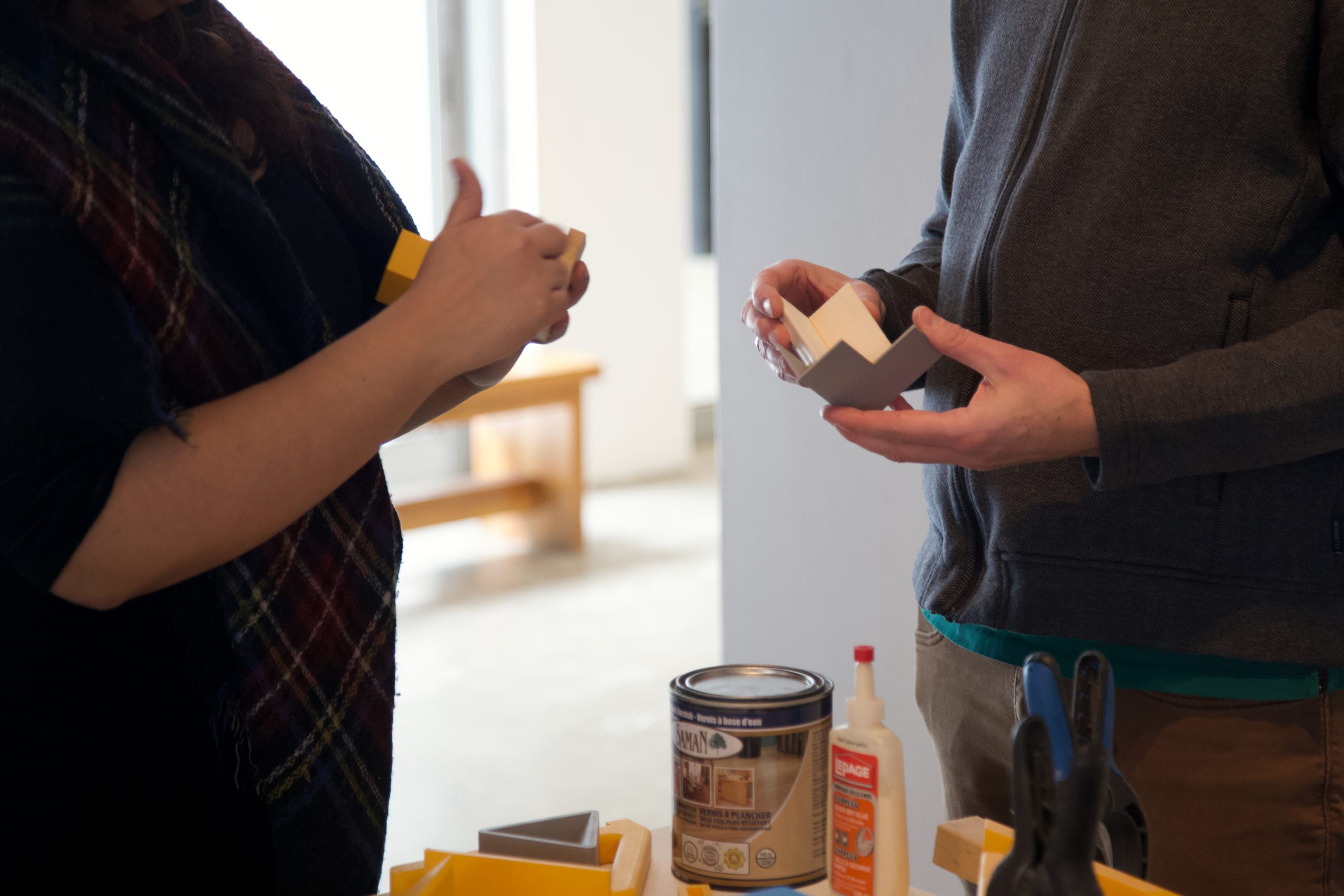
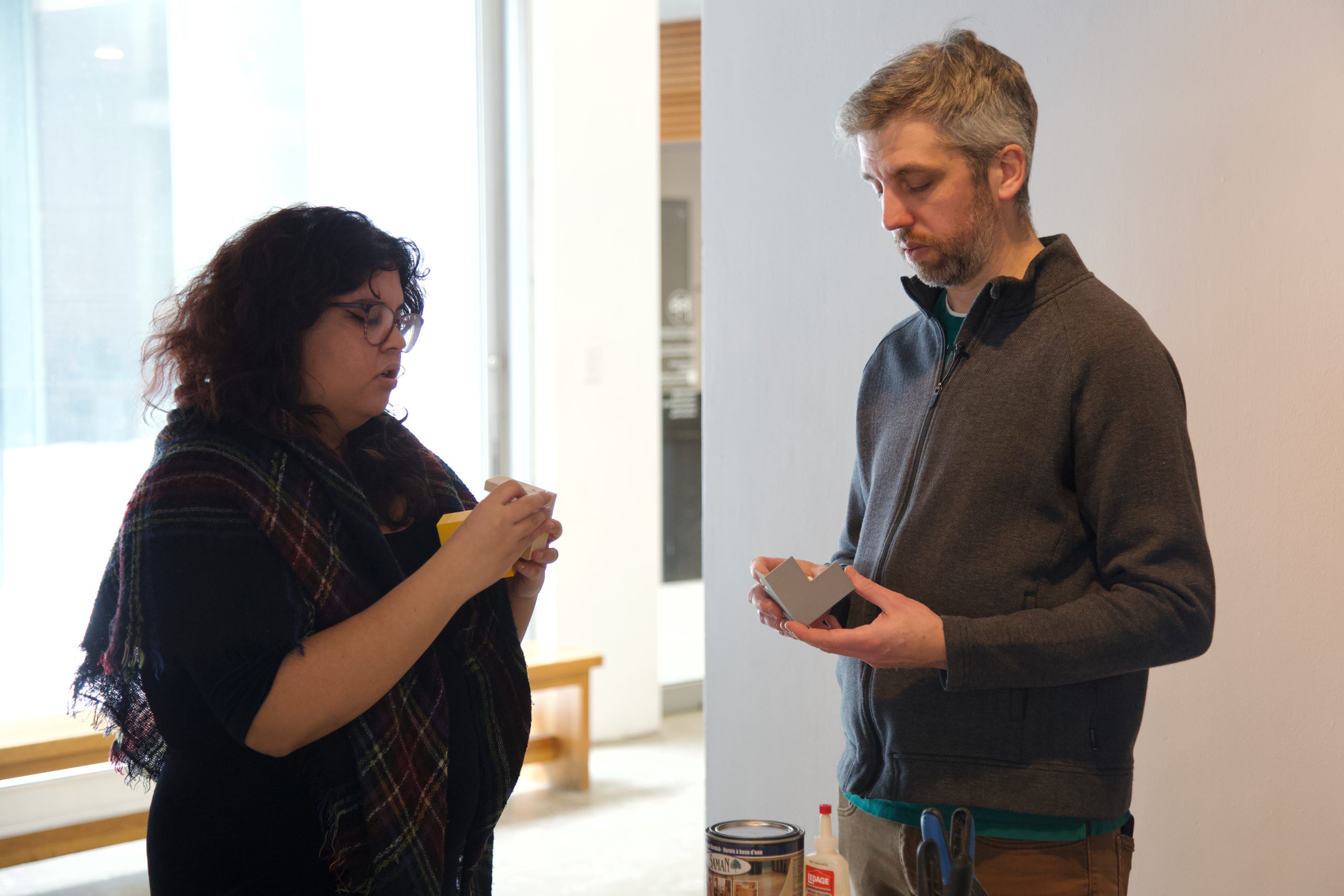
Photo by © Thomas Hagen-Veilleux
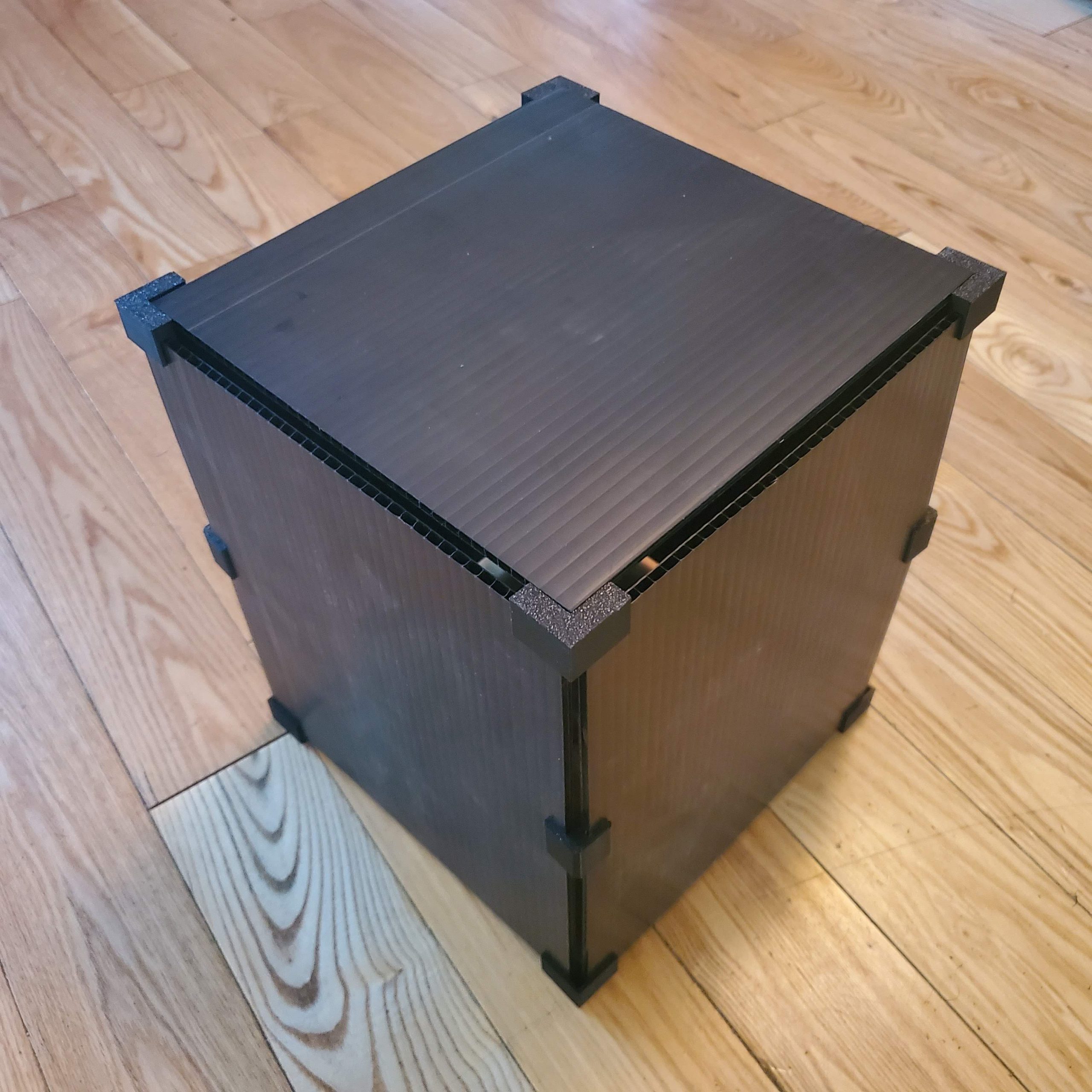
Version 2: The Traveling Plinth (July 2025)
Designed for adaptability and lightweight transport.
Focus: Optimized for portability and the upcycling of temporary signage materials.
Materials: Reclaimed Coroplast (corrugated plastic) and custom 3D-printed PLA corners.
Tools: Bambu Lab P1S, AutoDesk Fusion 360, manual cutting tools.
Version 1: The Upcycled Prototype (January 2025)
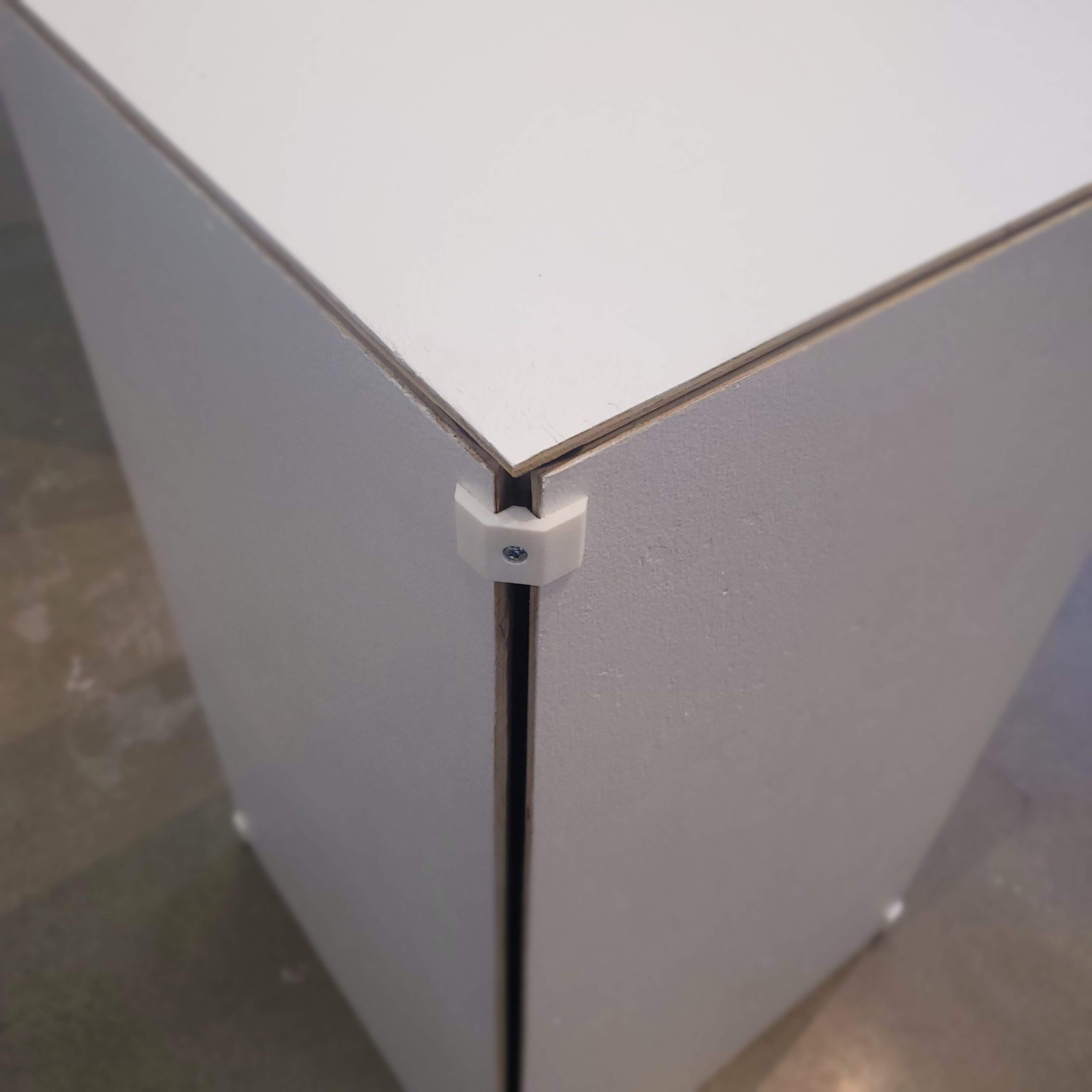
The “proof of concept” that gave new life to decommissioned gallery assets.
Debut: Premiered at the manifesting gardens undergraduate student exhibition
Source: A “non-usable” plywood plinth (#17A) from FOFA storage.
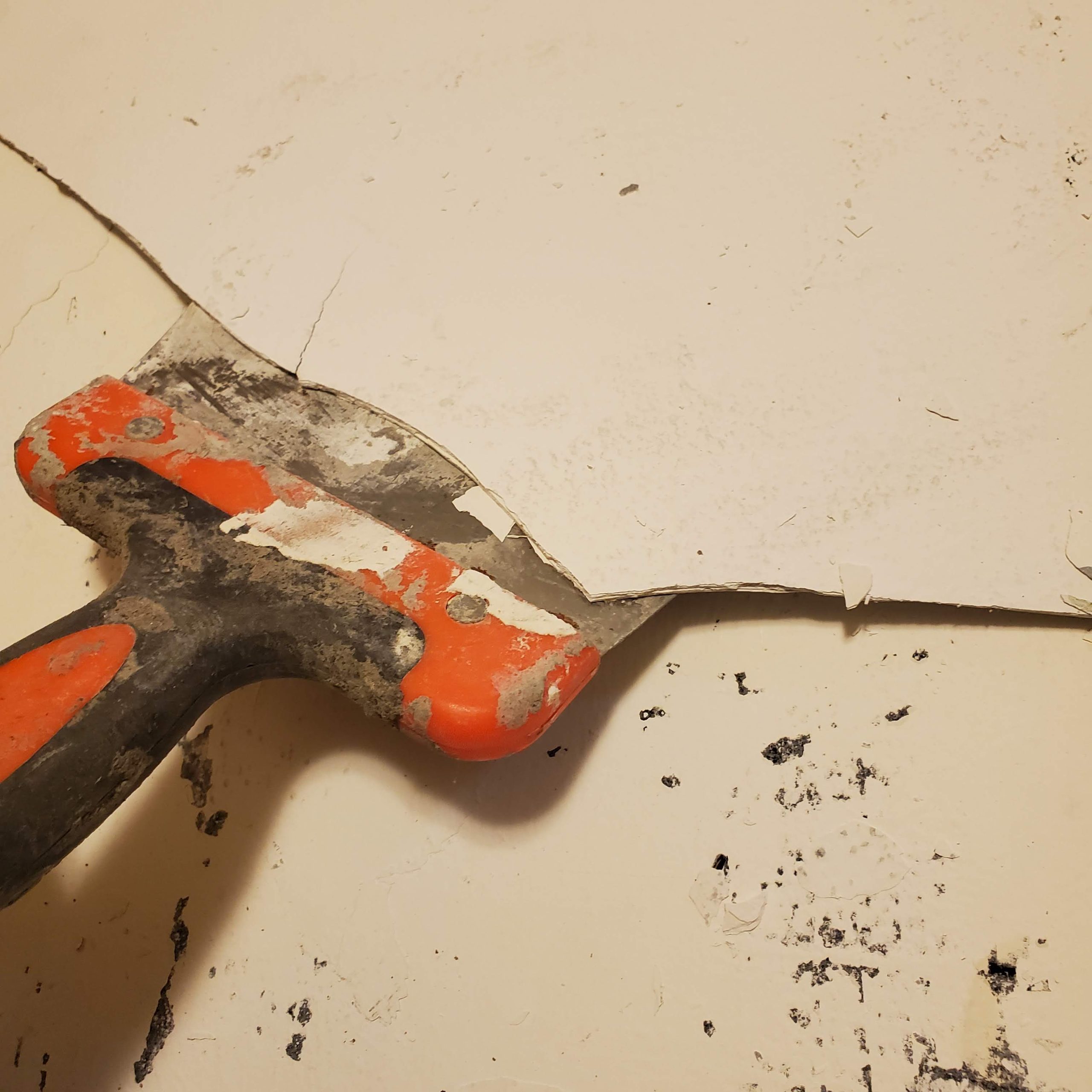
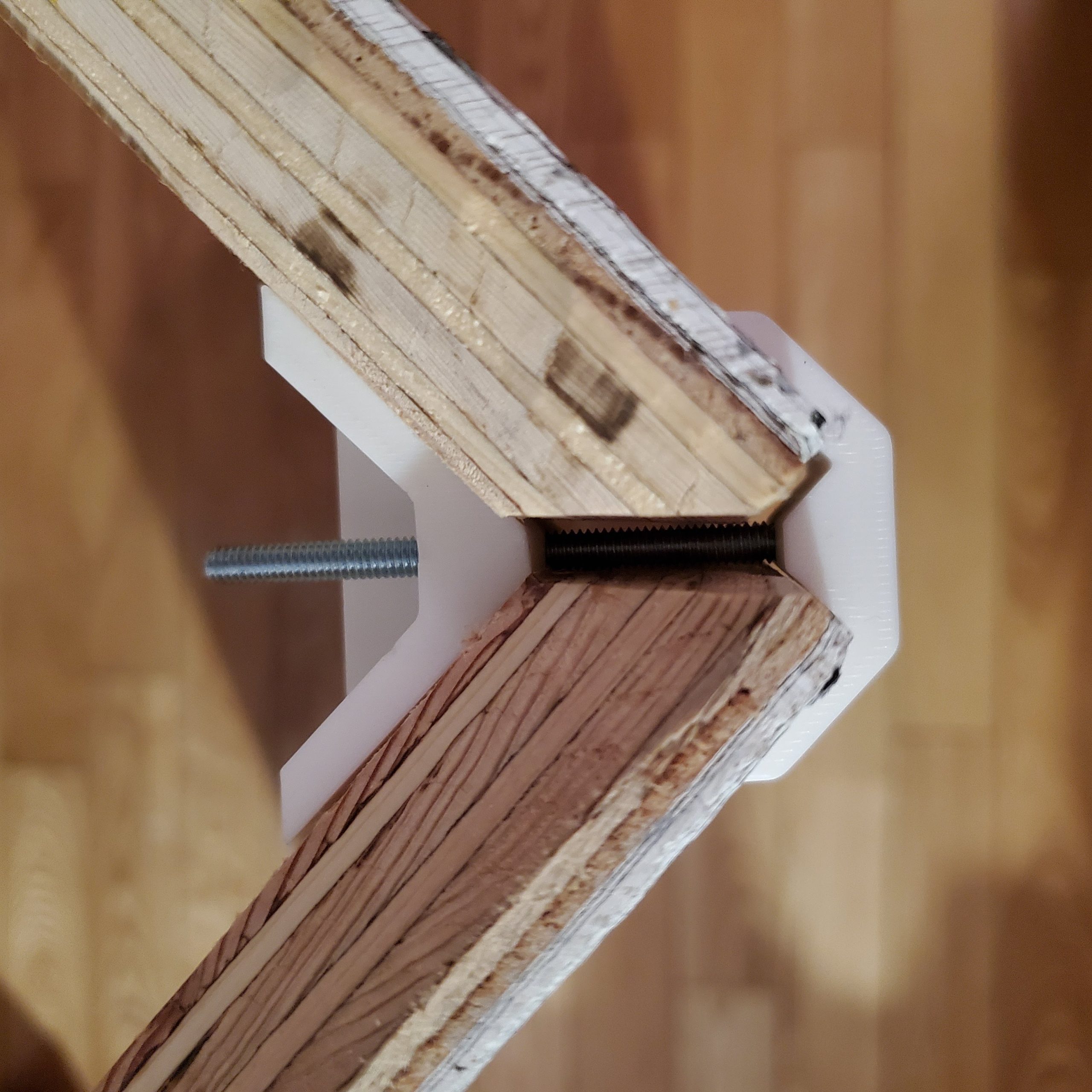
Process: The original box was broken down using a circular saw, stripped of years of plaster and paint, and reassembled using 3D-printed internal connectors.
Tools
Bambu Lab P1S 3D printer, AutoDesk Fusion 360, circular saw, compact router, palm sander, plaster knife
Lunchbox talk with Arrien Weeks: the Modular Plinth Project
March 5, 2025
Related articles
Concordia’s FOFA Gallery advances sustainable art curation with the Modular Plinth project
Concordia NEWS, January 9, 2025
Process
Breaking down an old plywood plinth to test the concept of modularity came with some surprises. Most notably how much plaster and paint had been added to the surface and how thick the plywood was (almost 1 inch).
Inspiration
The idea for the modular plinth connectors didn’t come out of thin air. I was seeing a lot of modular furniture connectors out in the world, particularly the ones shown blow. I bought and printed some of them, but thought they were quite big.

Modular Furniture / Cromagnon / CULTS3D
:format(webp)/https://fbi.cults3d.com/uploaders/4717968/illustration-file/2955067c-b165-4a0c-9940-c73066bce7b4/Shooting01_3.jpg)
:format(webp)/https://fbi.cults3d.com/uploaders/4717968/illustration-file/7c7bb6d8-b0cf-474d-8deb-454eb8053243/Shooting01_10.jpg)
PLY90 (no longer in production)


Leave a Reply